The Fingers of Steel Workout: A Finger Strength Session You Might Regret
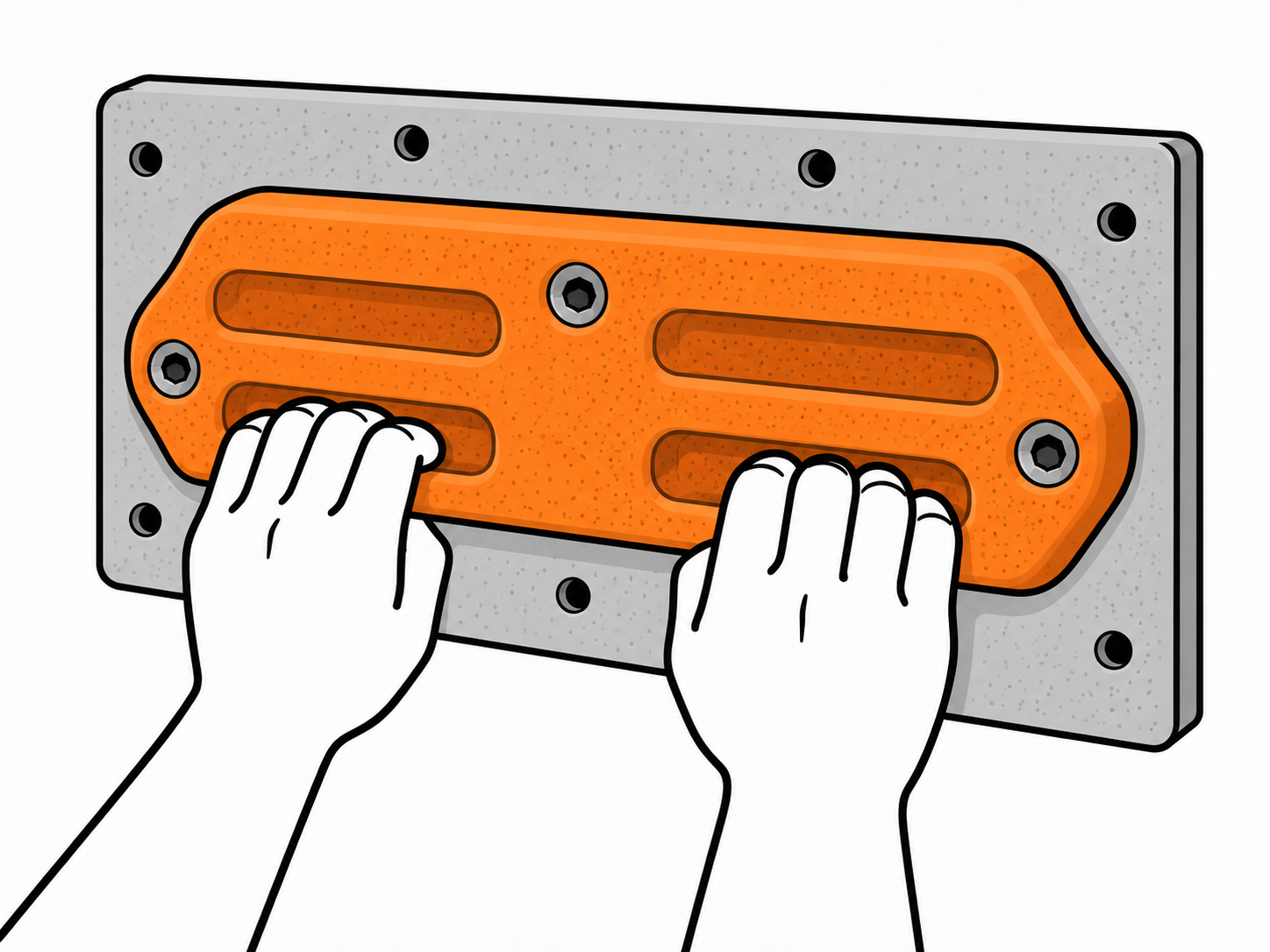
The name is dramatic, and the workout is worthy of it. Fingers of Steel is designed for maximum finger strength and body tension, and it delivers both, along with an honest conversation with your tendons about their future. You'll need a fingerboard and a campus board, some time, and a reasonable relationship with discomfort.
Before we begin, a disclaimer with technical content: this is an advanced session. Finger tendons and pulleys adapt much slower than muscle, and the campus board is famous for delivering injuries to people who confused enthusiasm with readiness. If you're new to campusing or fingerboarding, build up gradually or skip the campus section for now.
The setup
- Tools: fingerboard and campus board.
- Rest between exercises: 1 minute.
- Repetitions: 1 rep of each exercise.
Part 1: the hangs
Each hang is 10 seconds. Keep your shoulders engaged and your body still, and don't swing, kick or bargain. If you can't hold 10 seconds with good form, use a bigger hold or take weight off with a foot or a pulley.
- Two arm dead hang on big edges. Your warm-up hang. Treat it as a chance to check that your fingers still work.
- One arm dead hang on an edge, left and right. If one arm is impossible, use a partial assist, such as a towel loop, a band or one finger on a lower hold.
- One arm dead hang on a sloper, left and right. Slopers demand open-hand strength and body tension. Pull your shoulder blade down and keep your hips close to the board.
- One arm dead hang on an edge, left and right. Round two. It is worse than round one.
- One arm dead hang on a sloper, left and right. Same story.
- Two arm dead hang on narrow crimps. Half-crimp position where possible, and avoid full-crimping with your thumb over the fingers if you're prone to pulley strain.
- Two arm dead hang on wide crimps. A different stress on the shoulders and elbows.
- Repeat narrow, then wide crimps twice more. By now the hold feels like it's shrinking, which is normal and a bit rude.
Part 2: the campus board
Once the hangs are finished, move to the campus board for one set of each drill. Take your minute of rest between them.
- Ladders: alternate hands upward rung by rung. Keep it controlled.
- Skippers: skip rungs on the way up. Bigger reaches, bigger load.
- Bumps: one hand bumps a rung higher while the other holds on. This teaches explosive contact strength.
- Doubles: move both hands simultaneously to the next rung. This one is the real test of power.
- Matching: match hands on a rung before moving on. It tests control and finishing strength.
Technical guidance
- Warm up first. Spend 20 minutes on easy climbing and progressive hangs before starting. Cold fingers plus this session equals a bad week.
- Quality over quantity. Stop a rep when form fails, not when you're exhausted.
- Use the half-crimp and open-hand grips more than full crimping, especially early in the session.
- Stay away from the campus board when tired. The drills need snap, and snap doesn't exist when you're wasted.
- Frequency: at most once or twice a week, with at least 48 to 72 hours between hard finger sessions.
Progressions
When the session feels solid, progress by a single variable: reduce the edge depth by a few millimetres, add a small amount of weight to hangs, or increase the reach on campus drills. Never change all three at once, unless you enjoy physiotherapy.
Stop signs
Sharp, localized pain in a finger joint or along a tendon means stop. A dull pump in the forearms is normal, but a pop, a sudden sharp pain or pain that lingers past the session is not. Take it seriously, rest, and see a professional if it persists. Steel fingers are a nice slogan, but real fingers are made of biology, and biology negotiates.
Sample weekly placement
Because this session is demanding, place it carefully. A sensible week might look like this: Monday, Fingers of Steel (fresh, after a rest day); Tuesday, easy climbing or mobility; Wednesday, technique and volume on moderate terrain; Thursday, rest; Friday, a second hard session, but not another finger-heavy one; weekend, outdoor climbing or easy volume. Never stack this workout the day after a hard bouldering session, and never squeeze it in because you feel guilty about last week.
Warm-up template
- 5 minutes of light cardio and shoulder circles.
- 10 minutes of easy climbing, gradually adding difficulty.
- Three to four progressive hangs on a big edge, 10 seconds each, adding load or reducing holds each time.
- Two easy campus moves or pull-ups to wake up the nervous system.
Recovery after the session
Expect some soreness in the forearms. Spend a few minutes on gentle wrist and finger mobility, eat a proper meal with protein and carbohydrates, and hydrate. The next day, skip finger work entirely, and if the tendons at the base of your fingers feel tender or warm, take another day. A recovery day is a training decision, not a moral failing.